GH-RP Peptide Profile
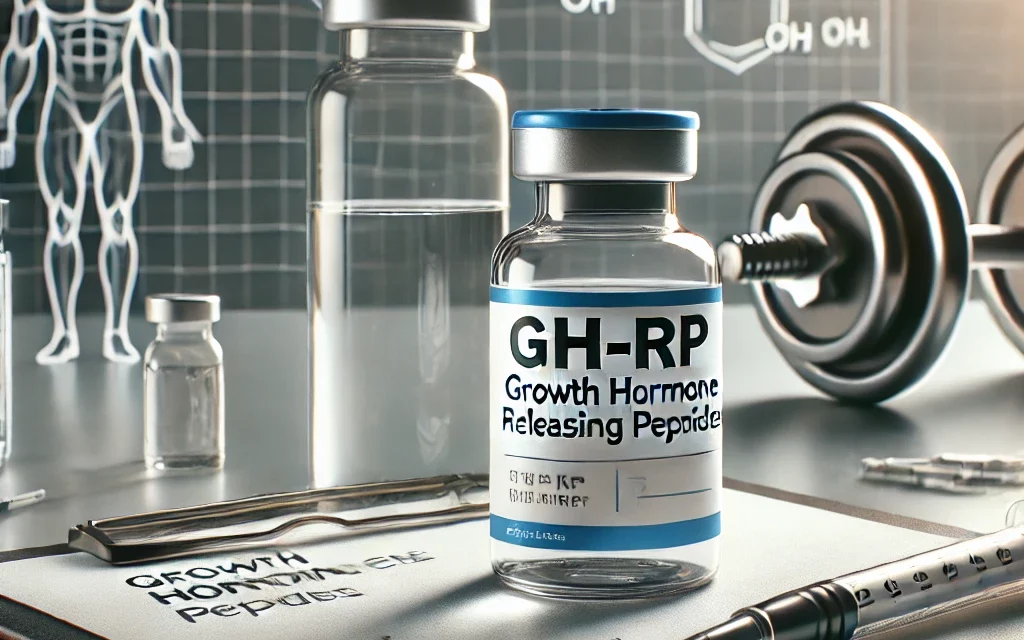
Growth Hormone-Releasing Peptides (GH-RPs) are synthetic peptides designed to stimulate the release of growth hormone (GH) from the pituitary gland. These peptides mimic the effects of ghrelin, a naturally occurring hormone, to promote GH secretion and enhance various physiological processes, including muscle growth, fat metabolism, and tissue repair. GH-RPs are widely used in fitness, anti-aging, and medical applications due to their ability to optimize growth hormone levels safely and effectively.
How GH-RPs Work
GH-RPs bind to specific receptors in the pituitary gland, triggering the release of growth hormone. They work by:
- Mimicking ghrelin to activate growth hormone secretagogue receptors (GHS-R).
- Increasing the frequency and amplitude of natural GH pulses, enhancing its effects on the body.
- Improving the natural rhythm of GH secretion without overstimulating cortisol or prolactin production.
Common Types of GH-RPs
GHRP-2
- Strongly stimulates GH release with minimal side effects.
- Known for increasing appetite and promoting muscle recovery.
- Effective for individuals seeking enhanced growth hormone activity.
GHRP-6
- Stimulates GH release while boosting appetite significantly.
- Ideal for muscle growth and recovery in athletes and bodybuilders.
- Also supports fat metabolism and tissue repair.
Ipamorelin
- Offers selective stimulation of GH without significantly affecting cortisol or prolactin levels.
- Suitable for long-term use due to its gentle action and minimal side effects.
- Promotes fat loss, muscle repair, and anti-aging benefits.
Key Benefits of GH-RPs
Muscle Growth and Recovery
- Stimulates muscle protein synthesis, promoting muscle hypertrophy and faster recovery after exercise.
- Enhances tissue repair and reduces recovery time from injuries.
Fat Metabolism
- Increases lipolysis (fat breakdown), aiding in fat loss and improved body composition.
- Reduces visceral fat while preserving lean muscle mass.
Anti-Aging and Skin Health
- Supports collagen production, improving skin elasticity and reducing wrinkles.
- Enhances overall vitality and combats age-related decline in GH levels.
Improved Sleep and Energy
- Boosts sleep quality by supporting natural GH release during deep sleep.
- Increases energy levels and overall physical performance.
Applications
GH-RPs are commonly used for:
- Enhancing athletic performance and muscle growth.
- Supporting weight loss and fat metabolism.
- Combating the effects of aging by improving skin health and vitality.
- Accelerating recovery from injuries and surgeries.
Dosage and Administration
GH-RPs are typically administered via subcutaneous injection. Dosages vary depending on the specific peptide, individual goals, and medical guidance. They are often used in cycles to maximize benefits and minimize tolerance buildup.
Potential Side Effects
While GH-RPs are generally well-tolerated, potential side effects include:
- Temporary injection site irritation.
- Mild water retention or bloating.
- Increased appetite, particularly with GHRP-6.
Proper dosing and medical supervision help reduce the likelihood of side effects.
Conclusion
GH-RPs are highly effective peptides for optimizing growth hormone levels, offering significant benefits for muscle growth, fat loss, anti-aging, and recovery. Their ability to mimic natural hormonal processes makes them a safer alternative to direct growth hormone administration. With careful use and medical supervision, GH-RPs can support improved health, performance, and vitality.
GH-RP Peptide Profile
THIS GH-RP (GROWTH HORMONE–RELEASING PEPTIDE) INFORMATION IS FOR BOTH ADULT MALES AND ADULT FEMALES.
| Peptide / Class: GH-RP (e.g., GHRP-2, GHRP-6, Ipamorelin) | Category / Goal | Example Amount per Use* | Frequency Pattern* | Typical Cycle Length* | Notes |
|---|---|---|---|---|---|
| Adult Males – General GH Support / Recovery | Experimental GH-releasing peptide class sometimes used in clinics for “GH support,” recovery, or body composition under medical supervision | Clinic- and forum-style ranges commonly talk about 50–150 mcg per injection as a lower range, with some protocols going up toward 200–300 mcg per injection in selected patients. There is no single standardized dose for all GH-RP products; each molecule and formulation has its own pharmacology. | Often described as 1–3 injections per day, spaced through the day (for example morning, pre-training, and bedtime). In more conservative medical-style use, once-daily or once-daily bedtime dosing is common at first to assess tolerance. | Cycles are often 8–12 weeks of use followed by an off-period at least as long as the “on” time. Some protocols use shorter “blocks” (4–6 weeks) in higher-risk patients or those being monitored closely. | For adult males, doses near the lower end of the range are typically enough to test response (sleep, recovery, body composition). Higher, more frequent dosing should only happen under a provider who is checking IGF-1, glucose, lipids, and overall health status. |
| Adult Females – General GH Support / Recovery | Same GH-releasing class; females may have more sensitivity to dose and side effects | Many cautious sources and clinicians, when they use this class at all, prefer 50–100 mcg per injection as a typical upper bound starting point, often not pushing as high or as fast as in male protocols. Some women may do well at single daily doses without going to multiple daily injections. | Frequency is usually 1–2 injections per day at most when starting (for example bedtime only, or morning + bedtime). Only if well tolerated and clearly beneficial might frequency be increased, and only with medical guidance. | Cycles in women are often kept shorter and more conservative, for example 6–8 weeks on followed by at least 6–8 weeks off, to observe menstrual changes, fluid retention, or mood shifts. | Women should be monitored for changes in cycle regularity, breast tenderness, unusual swelling, or headaches. If these appear, the dose is typically reduced or the peptide is stopped altogether. Self-escalating beyond a physician’s plan is especially risky. |
| Both Sexes – Timing & Administration Context | Typical experimental / clinic-style timing | GH-RP products are usually given subcutaneously with a small insulin syringe into the abdomen, thigh, or another fatty area. Some protocols emphasize fasted injections (for example upon waking or several hours after eating) to avoid blunting GH response with high blood sugar or insulin. | Common patterns include once at bedtime (to reinforce natural GH pulse), or pre-training and/or morning dosing. In stricter medical settings, bedtime only is often preferred initially to limit daytime side effects such as hunger changes or lightheadedness. | Shorter blocks (e.g., 5 days on / 2 off, or 4–6 weeks on then off) may be used to reduce the risk of desensitization and to allow re-evaluation of labs and symptoms. | Injection technique, site rotation, and sterile handling matter. Poor injection technique can cause welts, infection, or inconsistent absorption. Research-labeled products are not held to the same standards as pharmacy medication, which adds purity and sterility risk. |
| Both Sexes – Stacks & Combinations (Context Only) | Often combined with GHRH analogs or other peptides | GH-RP peptides are frequently discussed in combination with GHRH analogs (like CJC-1295 variants) or other recovery/hormone compounds. Stacking is thought to amplify GH/IGF-1 output but also amplifies possible side effects, particularly on blood sugar, water retention, and long-term growth-axis risk. | When physicians use GH-axis strategies, they typically introduce one agent at a time, monitor labs (GH surrogates, IGF-1, glucose/A1c, lipids) and only then consider combinations if benefits justify risk. | Cycle planning usually looks at the total growth-axis load from all agents, not just GH-RP alone. Off-time is important to let pituitary and peripheral tissues reset. | People already on growth hormone, insulin, or strong anabolic regimens are at higher risk when adding GH-RP; combining multiple growth and insulin-related agents without lab monitoring is essentially guesswork with long-term health. |
| Both Sexes – Side Effects & Red Flags | What to watch for | Potential issues sometimes reported with GH-RP-class use include increased hunger (notably with some GHRPs), flushing, tingling, headaches, transient lightheadedness, and in some cases changes in sleep pattern or vivid dreams. | Signs of problematic response include persistent edema (swelling in hands/feet), joint pain, numbness/tingling, frequent headaches, or significant changes in fasting glucose or weight unrelated to diet/training. | New or worsening carpal tunnel-type symptoms, unexplained growth of moles or lumps, or significant blood sugar swings are reasons to stop and get evaluated. | Under proper supervision, a provider will check IGF-1, glucose/A1c, and sometimes lipids and thyroid function to ensure GH-axis modulation isn’t causing silent damage. Doing this without labs and medical input is flying blind. |
| Both Sexes – Contraindications & High-Risk Situations | Who should avoid unsupervised GH-RP use | People with a history of cancer, strong family history of hormone-sensitive cancers, uncontrolled diabetes, proliferative retinopathy, active serious illness, or significant organ disease are typically considered high-risk for any GH-axis stimulation. | Adolescents, pregnant or breastfeeding individuals, and those with untreated pituitary or thyroid disease should not be experimenting with GH-related peptides. | Those taking insulin or strong glucose-lowering drugs face higher danger of hypoglycemia or unstable blood sugars when manipulating GH and IGF-1. | Even in supervised endocrine care, growth-axis drugs are handled cautiously. In unsupervised settings, misdosing, poor product quality, and lack of monitoring can turn a “performance experiment” into a long-term health problem. |
| Both Sexes – Storage & Product Quality | How products are handled | GH-RP peptides generally come as lyophilized powders that are kept refrigerated and protected from light before reconstitution. Once mixed with bacteriostatic water, vials are typically stored in the fridge and used within a limited window, per pharmacy instructions. | Solutions that become cloudy, discolored, or contain particles should be discarded. | Gray-market “research only” sources can have incorrect dosing, impurities, or bacterial contamination. | Pharmacy-grade, prescription products used under physician orders are the only responsible route if GH-axis therapy is being considered. |
*All amounts and schedules above are example descriptions of how GH-RP-class peptides are commonly discussed in experimental and clinic-style contexts. They are not standardized medical dosing and not a recommendation for you to use these peptides in any way.
⚠️ Warning: This chart is for general educational purposes only and this is not profesional advice or a personal dosing guide. GH-RP peptides affect the growth-hormone / IGF-1 axis and can influence blood sugar, organs, and long-term health. Never start, stop, or change any peptide, hormone, or performance protocol without a qualified healthcare provider who knows your full medical history and can monitor you properly.