.
Popular Peptides Power Overview
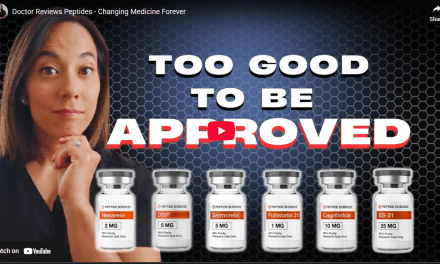
Dr. Ashley Frzy, a board-certified primary care physician in Mesa, Arizona, uses a direct primary care model, which means working directly for patients instead of insurance companies. That freedom lets Dr. Frzy dig into topics like peptide therapy that many traditional clinics won’t touch. In a rapid-fire breakdown, Dr. Frzy runs through twenty of the most talked-about peptides today—what they do, why people use them, and why every one of them needs serious caution and respect. This is education, not encouragement to self-prescribe.
The tour starts with the “spicy” category: fat loss peptides. Semaglutide is first. It’s FDA-approved, a GLP-1 agonist that helps people feel full longer and improves insulin sensitivity. It is extremely effective for weight loss but commonly causes nausea and constipation. Next comes Tirzepatide, a dual GLP-1 and GIP agonist. It usually produces even greater weight loss with fewer side effects, but it’s more expensive. Then there is Retatrutide, the “triple hitter,” acting on GLP-1, GIP, and glucagon receptors. It is not yet something Dr. Frzy can legally prescribe, but early research suggests up to about 24 percent body-weight reduction in some studies, which is enormous.
AOD-9604 follows as a fragment of human growth hormone, essentially GH with the tail end chopped off. It’s marketed as a fat burner, but results in real people and studies are very mixed. Dr. Frzy openly questions whether it is worth trying. Tesamorelin, on the other hand, is a potent fat burner with a specific niche: it is FDA-approved for HIV-associated lipodystrophy, where it helps reduce abnormal visceral fat deposits. It is not a general cosmetic weight-loss drug, but its visceral fat–cutting effect is very real.
From fat loss, the focus shifts to healing and recovery peptides. BPC-157 is one of the most famous peptides of all—it’s often called the “ultimate repair man.” People use it hoping to accelerate healing of joints, tendons, ligaments, and gut tissue. Anecdotes range from life-changing relief to “nothing happened,” but its popularity is undeniable. TB-500 (thymosin beta-4 fragment) is its partner in crime, a systemic tissue healer that is usually combined with BPC-157. It appears to be upregulated in injured tissues in animal studies and is used by many people to support full-body repair and recovery.
Immune-modulating peptides come next. KPV is a fragment of alpha-MSH, a hormone that influences pigmentation, inflammation, and immune response. KPV may boost melanin production, help tan the skin, calm inflammation, and support immune resilience. It is being researched for inflammatory bowel diseases like Crohn’s and ulcerative colitis. Thymosin Alpha-1 is another immune-support peptide that helps tune the immune system so the body can respond better to infections. People often say they “think it’s helping,” but it can be subtle rather than dramatic.
Then come the strength, muscle, and recovery boosters. CJC-1295 and Ipamorelin are often used together because they synergistically increase growth hormone and IGF-1 levels. Users hope for improved strength, muscle mass, endurance, and faster recovery between training sessions. MOTS-C is a mitochondrial peptide produced naturally in the body; using it exogenously may increase mitochondrial number and function. More mitochondria can mean better endurance, higher energy, and potential anti-aging effects. IGF-1 LR3, a long-acting IGF-1 analog, is popular in hardcore bodybuilding circles for bigger muscle and faster recovery. But it carries serious risks, and Dr. Frzy stresses that this is not a casual or beginner peptide.
Anti-aging and brain-focused peptides follow. Epitalon is thought to support telomere length and regulate melatonin. Some people use it to improve sleep and longevity markers, though the results are highly individual. It can help sleep in some and disrupt it in others. Selank is an anti-anxiety peptide originally developed in Russia. Some users say it eases daily anxiety as well as or better than benzodiazepines without the same addiction potential, while others feel worse or more anxious. Semax, by contrast, is more like a nootropic: it may sharpen focus and cognition, but it wears off and can leave a noticeable crash.
Beauty and libido peptides also get their moment. GHK-Cu, a copper peptide, is best known for skin and hair benefits. Dr. Frzy is skeptical about injections for cosmetic purposes, suggesting that topical creams are likely the better route if skin quality is the goal. PT-141 acts centrally on the brain to enhance libido in both men and women, but it can cause nausea and an odd genital sensation, so caution is needed. Melanotan II increases melanin for tanning and is the parent molecule from which PT-141 was derived. It definitely tans the skin, but many users report new moles or changes in existing ones, which is a red flag from a medical standpoint and enough to make some physicians avoid it completely.
The final peptide on the list is Kisspeptin-10. This compound stimulates gonadotropin-releasing hormone (GnRH), which in turn tells the pituitary gland to release FSH and LH. Those hormones drive sperm production in men and ovulation in women. Because of this, Kisspeptin-10 is being researched heavily for fertility and is sometimes used to support testosterone production as well. It’s one of the more hormonally targeted peptides with clear application in reproductive medicine.
Dr. Frzy closes with a strong disclaimer. This is not medical advice or a shopping list. Every potential benefit of these twenty popular peptides has a possible downside or opposite effect if misused. Anyone considering peptides should research deeply, talk to people with real-world experience, know exactly what outcome they are seeking, and start very cautiously—if at all—under knowledgeable medical supervision. The takeaway is not “go buy peptides,” but rather “know what they are so you can have an informed, honest conversation about them and understand the risks as well as the hype.”