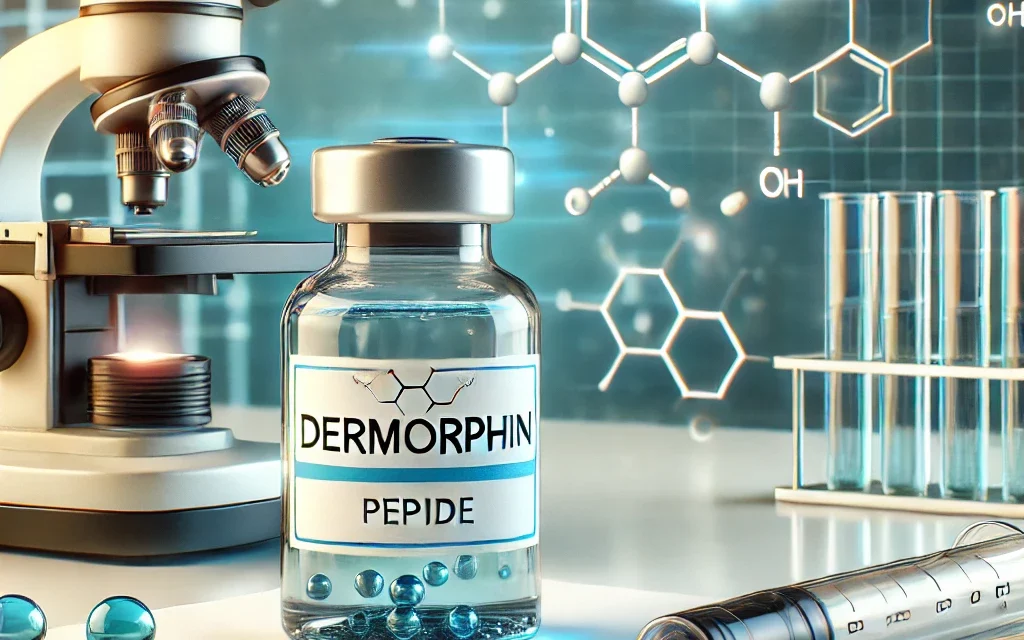
Dermorphin Peptide Profile
Dermorphin is a naturally occurring peptide derived from the skin of certain frog species, particularly in the Phyllomedusa genus. This unique peptide is a potent opioid, with analgesic effects far stronger than morphine but with significantly less risk of addiction and tolerance development. Its powerful pain-relieving properties and distinct pharmacological profile have made it a topic of interest in both medical research and illicit use in certain contexts, such as in sports.
How It Works
Dermorphin acts as an agonist at the µ-opioid receptors in the brain and nervous system, the same receptors targeted by morphine and other opioid drugs. However, its binding affinity is much higher, which explains its superior analgesic potency. Unlike traditional opioids, dermorphin is thought to produce fewer side effects, such as respiratory depression and tolerance, although research is ongoing.
Key Benefits
Potent Analgesia
- Provides powerful pain relief, up to 40 times stronger than morphine.
- Effective in treating severe or chronic pain with lower dosages.
Reduced Side Effects
- Potentially lower risk of addiction and tolerance compared to traditional opioids.
- Minimal respiratory depression in preclinical studies.
Neuroprotective Potential
- Emerging research suggests dermorphin may have applications in neurodegenerative conditions due to its receptor-specific activity.
Applications
Dermorphin is primarily studied for its potential therapeutic applications:
- Pain Management: For patients with severe chronic pain or conditions unresponsive to conventional opioids.
- Research in Neuroprotection: Potential uses in treating conditions like Parkinson’s or Alzheimer’s disease.
- Illicit Use in Sports: Illegally used by some athletes to enhance performance by masking pain, although this is strictly prohibited and detectable in drug testing.
Potential Side Effects
While promising, dermorphin use comes with risks and challenges:
- Unknown Long-Term Effects: Limited clinical studies mean potential long-term effects are not fully understood.
- Ethical and Legal Concerns: Its powerful effects have led to misuse in sports and other contexts.
- Adverse Reactions: Possible side effects include dizziness, nausea, or mild sedation.
Ethical and Regulatory Status
Dermorphin is not approved for medical use in humans and remains under investigation. It is classified as a prohibited substance in sports by the World Anti-Doping Agency (WADA) due to its potent analgesic properties and potential for misuse.
Conclusion
Dermorphin is a fascinating peptide with immense analgesic potential that could revolutionize pain management if its safety and efficacy are proven in clinical settings. However, its potent effects and current regulatory restrictions limit its use to research applications. With further study, dermorphin could pave the way for safer, more effective alternatives to traditional opioids.
Dermorphin Peptide Profile
THIS DERMORPHIN PEPTIDE INFORMATION IS FOR BOTH ADULT MALES AND ADULT FEMALES.
| Peptide / Product: Dermorphin | Category / Goal | Human Dose Information* | Route / Setting | Frequency / Cycle* | Notes |
|---|---|---|---|---|---|
| Adult Males – Human Use Context | Extremely potent μ-opioid receptor agonist peptide originally identified in frog skin secretions; misuse has been reported in performance doping and underground “pain” or “recreation” settings. | There is no safe, standardized, or approved human dosing for routine clinical, cosmetic, or performance use. Any online “dose” suggestions are unregulated self-experiments and can be life-threatening due to respiratory depression and overdose. | Any human administration outside a tightly controlled, ethics-approved research environment is considered unsafe and may be illegal depending on jurisdiction. | No medically accepted “cycle” exists for general human use. Dermorphin is not a weight-loss, performance, or wellness peptide and should not be treated as such. | For adult men, even very small amounts can have disproportionately strong opioid effects. Interacting with alcohol, sedatives, opioids, or benzos makes overdose risk extremely high. |
| Adult Females – Human Use Context | Same pharmacology as in males: extremely strong opioid effects with high risk of respiratory depression, dependence, and overdose. | Women are generally at least as sensitive as men to opioid effects; in some cases, body size and hormonal factors can make adverse reactions more likely at lower exposures. Again, there is no approved dosing range for non-research human use. | Any experimental use belongs only in formal research, with resuscitation equipment, monitoring, and emergency staff available. | There are no legitimate “beauty,” “energy,” “pain-relief” or “fat-loss” cycles for dermorphin in women. Marketing it this way is a red flag for unsafe, black-market activity. | Combining dermorphin with prescribed pain medication, sleep drugs, or alcohol can push breathing suppression over the edge and be fatal, especially in smaller or medically complex females. |
| Both Sexes – Potency and Risk Profile | Dermorphin shows far higher potency at μ-opioid receptors than morphine in experimental systems. This means very tiny quantity differences can separate “desired effect” from severe overdose. | Because of this potency, trying to copy “microgram” suggestions found on forums is especially dangerous; dose mismeasurement, mislabeled vials, or impurities can be enough to cause respiratory arrest. | In any setting, it should only be handled by professionals trained in opioids, with monitoring of breathing, blood pressure, heart rate, and level of consciousness. | There is no accepted long-term maintenance use for dermorphin in humans; chronic use would carry high risks for tolerance, dependence, and addiction similar to or worse than other strong opioids. | People with underlying lung disease, sleep apnea, obesity, or on other CNS depressants are at dramatically increased risk of life-threatening events when exposed to potent opioids like dermorphin. |
| Both Sexes – Veterinary / Doping Context (Not A Template For Human Use) | Dermorphin has gained notoriety for illegal use in racehorses, where extremely small doses have been abused to increase pain tolerance and performance. This is banned and heavily sanctioned. | Even in large animals, dosing is tightly scrutinized and its use in competition animals is considered doping and animal abuse. This illustrates how powerful the peptide is, not how to use it in people. | Racehorse doping incidents highlight that there is no legitimate “wellness” niche for dermorphin; it is associated with covert, unethical, and risky use. | Regulatory bodies test for dermorphin precisely because it is unsafe and gives unfair, cruel advantage; similar principles apply to any human sport or performance setting. | Attempting to translate horse or animal doses to human self-use is scientifically invalid and extremely dangerous. Species differences in opioid pharmacology are huge. |
| Both Sexes – Interactions & Stacking | Any concurrent use with alcohol, benzodiazepines, sleep meds, barbiturates, other opioids, or GABAergic drugs dramatically increases the risk of respiratory depression and death. | Stacking dermorphin with other painkillers, sedatives, or recreational substances is precisely how fatal overdoses happen; each agent pushes breathing, arousal, and reflexes further down. | Harm-reduction logic with opioids emphasizes never combining depressants, having naloxone available, and seeking medical supervision. With dermorphin’s potency, the margin for error is even narrower. | There is no safe “performance stack” involving dermorphin. Any suggestion online of combining it with other peptides, stimulants, or hormones is speculative and potentially lethal. | If someone is already on opioid therapy for chronic pain, introducing dermorphin on top is especially dangerous, even at small amounts, due to additive and sometimes unpredictable effects. |
| Both Sexes – Overdose Signs & Emergency Response | Warning signs mirror severe opioid overdose: slow or irregular breathing, very small “pinpoint” pupils, extreme drowsiness or unresponsiveness, bluish lips or fingertips, gurgling or snoring respirations, cold/clammy skin. | Any such symptoms after exposure to dermorphin or any unknown “strong pain peptide” are a medical emergency. Immediate action is required, not waiting to “sleep it off.” | Emergency response includes calling local emergency services, providing rescue breathing if trained, and administering naloxone if available, then repeating per instructions until professionals arrive. | Even if someone wakes up after naloxone, they must still go to the hospital. Dermorphin can outlast naloxone, causing re-sedation and recurrent respiratory depression. | Friends, partners, or gym partners should be aware of the signs of opioid overdose if anyone is experimenting with any strong opioid-like substance. The safest choice is to avoid this class entirely outside medically indicated, supervised treatment. |
| Both Sexes – Legal, Ethical, and Sourcing Considerations | Dermorphin’s legal status varies, but possession, sale, or administration may fall under controlled-substance or animal-drug rules, especially when used in sports or outside approved research. | “Research only” dermorphin vials sold on the internet are not guaranteed to contain what they claim; they may be under- or over-dosed, contaminated, or entirely different compounds. | Ordering such products for human injection is effectively self-experimenting with an unknown strong opioid sourced from an unregulated lab. This is a high-risk, high-liability behavior. | Ethically, using dermorphin in animals for performance enhancement is considered abuse; using it in humans without full informed consent, medical oversight, and rescue resources is similarly unethical. | The existence of black-market sources and underground protocols does not mean a practice is remotely safe. With dermorphin, the combination of potency, unknown purity, and opioid risks makes “DIY” use particularly hazardous. |
| Both Sexes – Safer Alternatives & Medical Pathways | For pain, sleep, or mood problems, there are approved, monitored treatments that have much more safety data, clear dosing, and reversal strategies. | If someone is seeking performance enhancement or extreme pain tolerance, this may signal underlying issues (body-image, sport pressure, unmanaged pain) that a qualified healthcare professional or counselor can address far more safely. | Clinicians can evaluate whether standard therapies, multimodal pain management, or supervised rehabilitation are appropriate instead of experimental opioids. | Anyone already entangled with opioid misuse should consider talking to an addiction specialist or seeking evidence-based treatment, including medication-assisted therapy and counseling. | The safest “protocol” with dermorphin for non-research, non-veterinary use is simple: avoid it and work with legitimate medical professionals on safer approaches. |
*Because of dermorphin’s extreme potency and lack of standardized, approved human use in routine clinical practice, no specific numerical “self-dosing” ranges are provided here. Any attempt to self-dose is high-risk and strongly discouraged.
⚠️ Warning: This chart is for general educational purposes only and this is not profesional advice or a personal dosing guide. Dermorphin is a highly potent opioid-like peptide with serious risks of overdose, dependence, and death. Never start, stop, or experiment with dermorphin or any similar substance without direct, in-person guidance from a qualified healthcare provider, and do not use black-market or “research only” products for human injection.